Mold remediation and removal
Mold Remediation and Removal in Delray Beach
First Class Mold and Water Restoration provides professional mold remediation and removal for residential and commercial properties in Delray Beach. We address visible mold, recurring growth, suspected hidden contamination, and musty odors associated with damp or water-damaged building materials.
What Professional Mold Remediation Does That DIY Cleaning Cannot
Mold remediation is a controlled process for containing affected areas, removing or cleaning appropriate materials, and addressing the moisture conditions behind the problem.
Remediation is more than wiping away visible discoloration. Mold may affect porous materials, concealed cavities, insulation, cabinetry, flooring systems, or other surfaces that cannot be resolved through basic household cleaning. The appropriate scope depends on the affected materials, size and location of the area, accessibility, and whether the underlying moisture source has been corrected.
What Are the Signs You May Need Mold Removal?
Recurring spots, persistent musty odors, damp materials, and visible growth following water damage may indicate the need for professional remediation.
Common warning signs
- Dark spots that return after repeated cleaning
- Musty odors with no obvious visible source
- Mold on drywall, ceilings, cabinets, or flooring
- Growth following a roof leak, overflow, or plumbing failure
- Damp closets, bathrooms, attics, or enclosed rooms
- Suspected contamination behind wet building materials
Musty odor without visible mold
A common symptom search is "why does my house smell musty without visible mold?" The odor may be connected to hidden moisture or growth, but the affected area must be identified before the correct scope can be determined.
Professional Mold Removal vs. DIY Cleaning
DIY cleaning may change the surface appearance, while professional remediation addresses affected materials, work-area control, and the moisture conditions allowing mold to return.
Small surface spots associated with routine maintenance may not require a full remediation project. However, professional help should be considered when the affected area is expanding, porous materials are involved, mold returns after cleaning, or the source is unclear.
Bleach and other household products do not reliably resolve mold embedded in porous drywall, insulation, wood products, or similar materials. Scrubbing or removing materials without containment may also disturb particles and spread debris beyond the original area.
Customers comparing mold remediation companies should ask how the provider controls the work zone, determines which materials require removal, and handles final cleaning.
What Does the Mold Remediation Process Include?
Our process defines the affected area, controls access, removes or cleans materials according to condition, and completes detailed cleanup within the approved scope.
- 1
Evaluate visible conditions
Review growth, moisture history, affected materials, and possible concealed areas.
- 2
Define the work zone
Establish access controls and containment appropriate to the project.
- 3
Manage airborne debris
Use air-management and HEPA filtration procedures when required.
- 4
Remove affected materials
Carefully remove porous materials that cannot be effectively cleaned.
- 5
Clean remaining surfaces
Complete detailed cleaning and HEPA-filtered vacuuming where appropriate.
- 6
Review next steps
Explain source correction, repairs, or separate clearance testing that may still be needed.
The exact procedure should reflect the property and affected materials rather than a one-size-fits-all package.
Why Are Containment and HEPA Filtration Important?
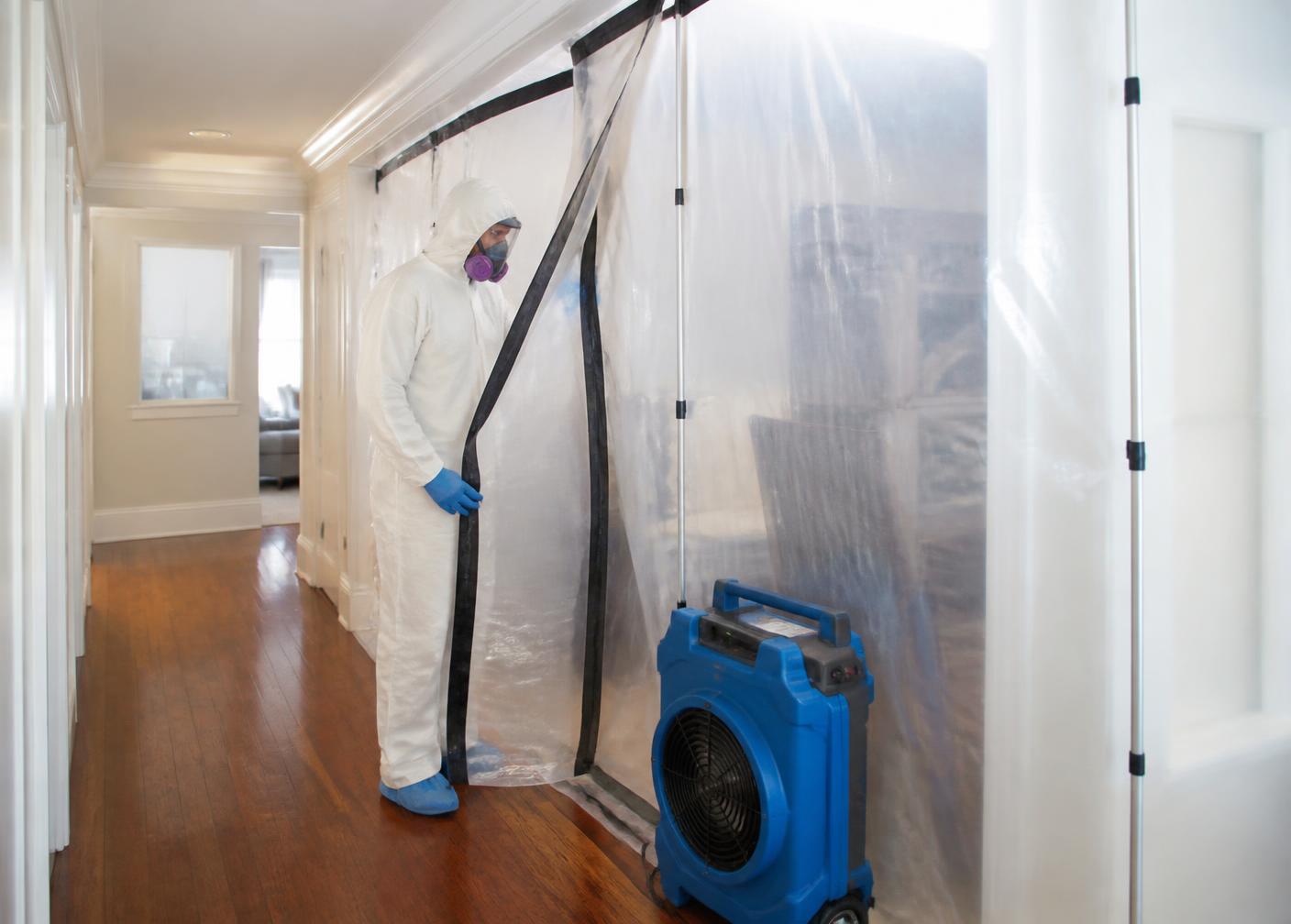
Containment and HEPA-filtered air management help control dust and debris while mold-affected materials are disturbed or removed.
Temporary barriers and controlled access help separate the work zone from unaffected parts of the property. Depending on the project, negative air pressure may also be used to manage airflow.
HEPA filtration is designed to capture fine particles from the air or surfaces during remediation. It is one component of a broader process that may also include controlled demolition, surface cleaning, material disposal, and moisture-source correction.
These technical controls are especially important in occupied homes, apartments, offices, hotels, healthcare environments, and other buildings where activity continues nearby.
Will Mold Return After Remediation?
Mold can return when the moisture source remains active or when damp materials are not corrected as part of the overall recovery plan. Remediation removes or cleans materials within the approved work area, but it does not permanently prevent future moisture events.
Recurring bathroom mold, attic growth, or dark spots on ceilings may be connected to humidity, condensation, roof intrusion, ventilation problems, or unresolved leaks. The appropriate qualified provider may need to correct those conditions. Customers should be cautious of permanent mold-free guarantees that do not account for future moisture or building maintenance.
Why Choose First Class Mold and Water Restoration?
We provide focused mold remediation, realistic recommendations, and clear explanations of the affected area, proposed scope, and moisture-related next steps.
Our team helps homeowners, business owners, and property managers understand why mold has developed, which materials are involved, and what the remediation process will require. We don't claim that every mold concern can be diagnosed by photographs or resolved with a single surface treatment. The property conditions determine the appropriate approach.
If the growth followed a leak or flood, see our water damage restoration services.
Mold Remediation FAQs
- Will mold return after remediation?
- Mold can return when the moisture source remains active or when damp materials are not corrected as part of the overall recovery plan. Remediation removes or cleans materials within the approved work area, but it does not permanently prevent future moisture events.
- Why are containment and HEPA filtration important?
- Containment and HEPA-filtered air management help control dust and debris while mold-affected materials are disturbed or removed.
- Why does my house smell musty without visible mold?
- The odor may be connected to hidden moisture or growth, but the affected area must be identified before the correct scope can be determined.
Request Mold Remediation and Removal
Concerned about visible mold, recurring spots, or a persistent musty odor? Fill out our online form, call (888) 681-2407, or email 1stclassfs@gmail.com to request mold remediation and removal.